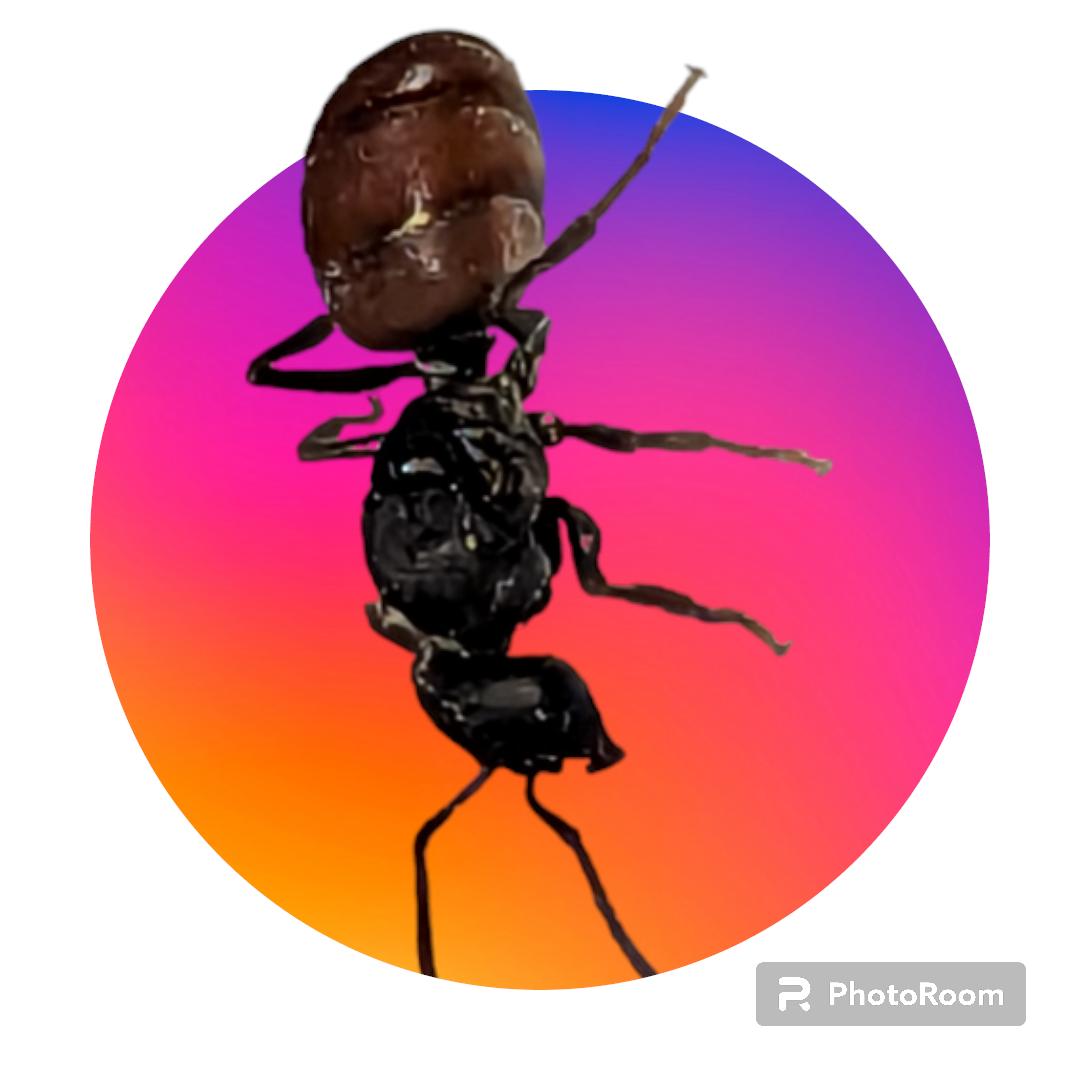
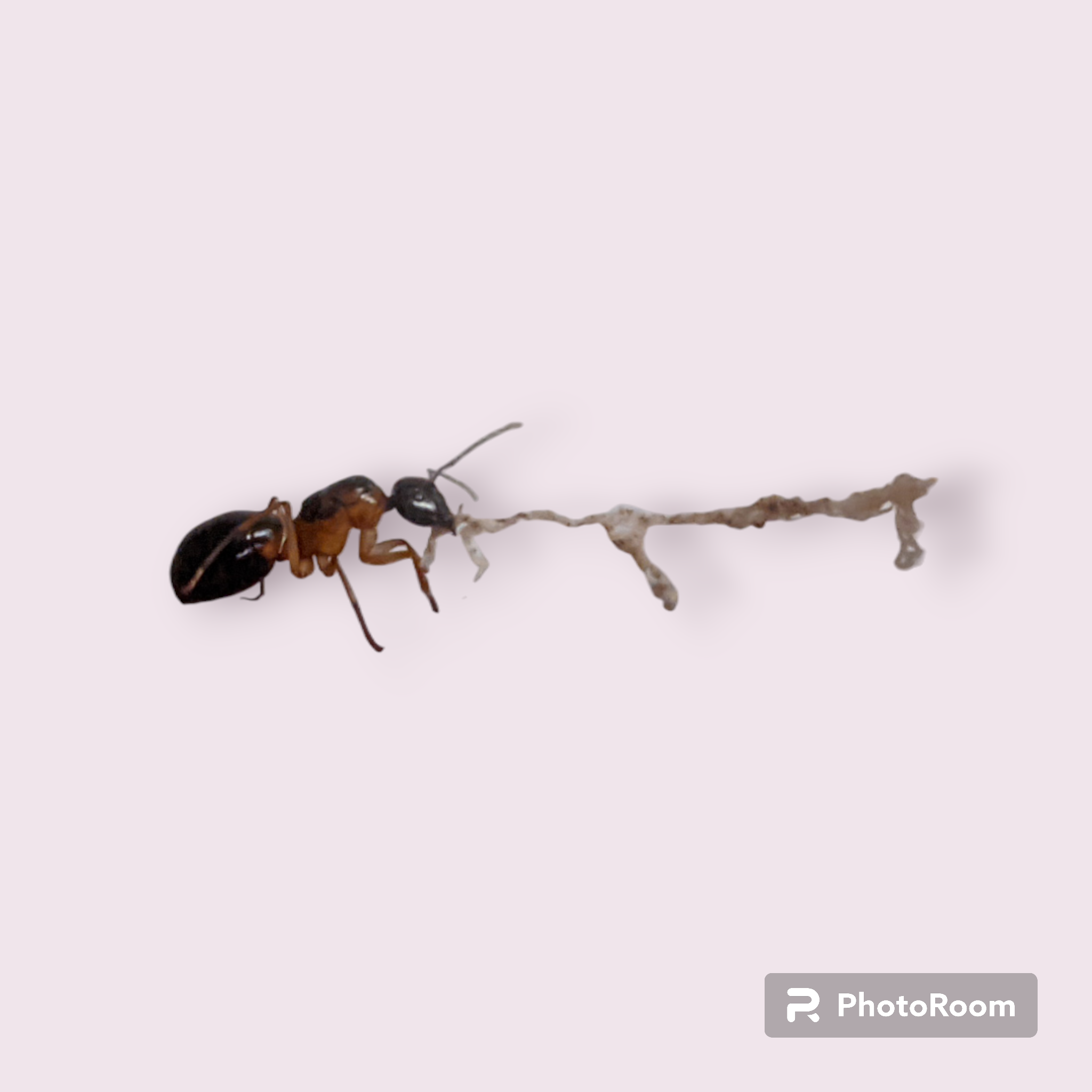
If you want to start an ant colony from scratch in Canberra, the banded sugar ant (Camponotus consobrinus) is a very good target. The short answer to “when and where do I find a queen?” is this: look between December and March, on a warm evening in the hour around sunset, ideally the day before rain. That timing comes from a published study of nests on the ANU campus. Below I’ll show you how to use it, how to recognise a queen, how to tell whether she’s likely to be fertile, and how to collect without wrecking anything.
When do banded sugar ants fly in Canberra?
A research team studying the eyes of this species watched 12 nests on the ANU campus over 62 observation days between 2008 and 2015. In their published paper, nuptial flights mostly happened from December to March. The winged ants left the nest within a narrow window of about an hour, from roughly 45 minutes before sunset to about 15 minutes after. The only weather cue the authors report is rain: flights typically happened the day before a rain event.
Two caveats. It’s one campus, so your suburb could be a week or two out of step. And the paper doesn’t report temperature or humidity, so “warm and muggy” is sensible rather than proven. Elsewhere, the Wikipedia article on the species notes that little is known about timing and mentions matings seen in January in South Australia and early December in south-east Queensland. If a source tells you a single precise date, be sceptical.
Using the weather (and the app) to pick your evening
Watch the forecast for a warm, humid spell that ends in rain. If you’d rather let your phone do the watching, my free Ant Nuptial Flight Predictor app rates each day from No-fly to Prime by comparing your local weather (temperature, humidity, wind, cloud, pressure and rain) with years of past days at your latitude and time of year, and gives honest odds such as “about 1 in 7 days like this see a reported flight”. It also shows hour-by-hour confidence for the coming hours and the week ahead, and it only sends a notification on Prime days. It covers ants in general rather than sugar ants specifically, so read a Prime day as “worth a walk tonight”, not a promise. The app is on Google Play and the App Store, and if you see a flight you can report it, which helps improve the predictions for everyone nearby.
Where to look
Banded sugar ants nest in wood holes, plant roots, soil, between rocks and under paving, according to the species summary. Workers forage at night, including on native trees. So on a likely evening, check the places where you’ve already seen workers: pavers, garden edges, tree bases and rockeries. After a flight, mated queens shed their wings and go looking for somewhere to dig in, so you’re hunting for large wingless ants walking alone. Take a torch and walk slowly.
How to recognise a banded sugar ant queen
- Size: queens are the largest ants in the colony. Workers are about 5 to 15 mm according to the Australian Museum. Hobby databases list queens at roughly 15 to 20 mm (for example antkeeping.info gives 18 to 20 mm), but I couldn’t find a published measurement, so treat it as a ballpark.
- Colour: the Australian Museum describes sugar ants as having a black head and abdomen and an orange-brown middle section. Banded sugar ants also have an orange-brown band across the abdomen, which is where the name comes from.
- Lookalikes: the black-headed sugar ant (Camponotus nigriceps) is lighter and lacks the band. The golden-tailed sugar ant (Camponotus aeneopilosus) is also recorded around Canberra. Polyrhachis (spiny ants) have spines on the thorax, which sugar ants lack, so look closely before you decide.
If you aren’t sure, photograph her and ask on Canberra Nature Map or iNaturalist before you commit a tube to her.
Is she fertile?
Winged queens still sitting at the nest are usually virgins waiting for the flight. A queen only founds a colony of workers if she has mated, because unmated females can only produce males (ants are haplodiploid). After a flight a mated queen drops her wings quickly (another Canberra Nature Map contributor makes this point on a queen sighting from the Arboretum), leaving two small stubs. So a wingless queen walking alone in the evening or next day is your best candidate.
You can’t be certain by looking. The real test is time: put her in a tube (see below) and, if she lays eggs that become larvae and then pupae, she was mated. Camponotus are slow starters, so give her several weeks before you worry.
Collecting without being that person
- Take one or two queens, at most. You don’t need a dozen, and the rest can start wild colonies.
- Never dig up or break open a nest. Let queens come to you.
- Leave parks and reserves alone. The NSW National Parks and Wildlife Service lists collecting animals as an illegal activity, and other states have similar rules.
- Know your local rules. In the ACT, section 11 of the Nature Conservation Act 2014 only counts an invertebrate as an “animal” if it is a protected native species or has special protection status. As I read it, that means a common sugar ant from your own backyard isn’t caught, but I’m not a lawyer, so check the Protected Native Species List and read my guide to ant keeping and the law.
- Only keep what’s local, and never release it elsewhere.
Housing her tonight
Keep it simple: a test tube with a water reservoir and a cotton plug, somewhere dark and quiet. Don’t feed her, and resist the urge to peek. My test tube setup guide has the steps, and the banded sugar ant care guide covers what comes next. Jot down the date and place you found her. It’s useful later, and it’s useful data if you report the flight.
If you can’t get out on the right evening, or you just want to skip the hunt, I sell banded sugar ant queens and colonies in the shop, shipped within Australia.
Frequently asked questions
When do sugar ants fly in Canberra?
Mostly from December to March, in the hour around sunset, often the day before rain, based on one study of nests at the ANU.
How can I tell if a queen ant has mated?
A wingless queen found wandering after a flight has most likely mated. The proof is eggs developing into larvae and pupae over the following weeks.
Do I need a permit to collect a queen ant in the ACT?
Under the Nature Conservation Act 2014, ordinary invertebrates are generally outside the “animal” definition unless protected, but I’m not a lawyer. Check the protected species list, stay out of reserves, and ask the Conservator of Flora and Fauna if unsure.
How many queens should I collect?
One or two. Starting one colony well beats keeping five tubes badly.
What do I feed a new queen?
Nothing at first. Keepers generally treat sugar ant queens as claustral, meaning they live off body reserves until the first workers hatch. Feed once workers appear.
