

Description
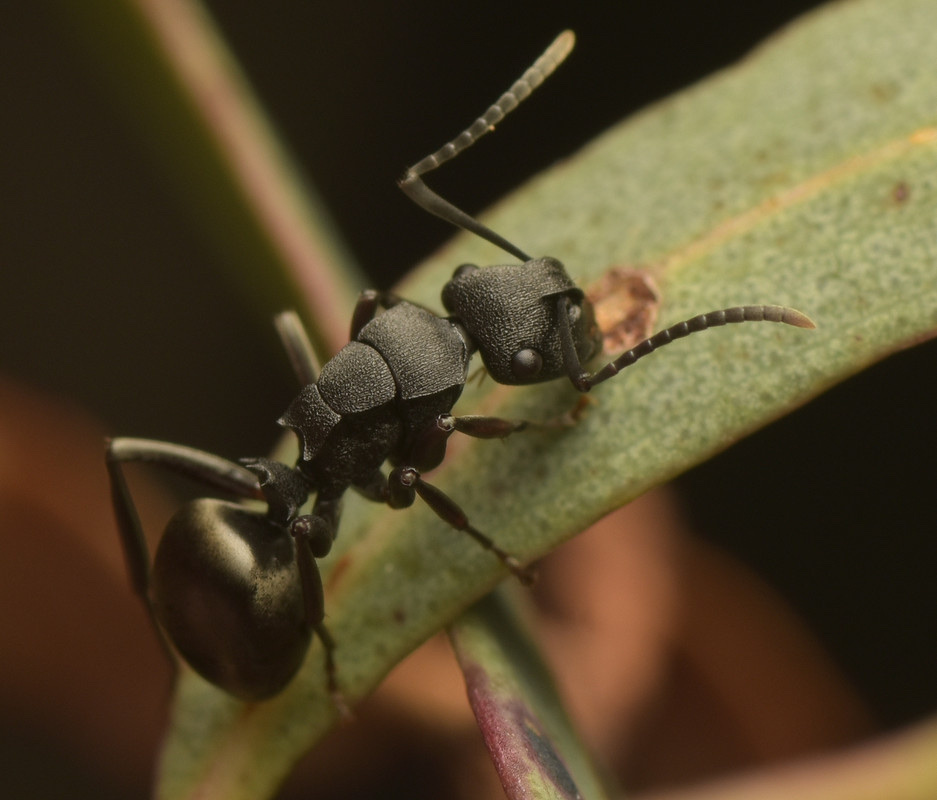
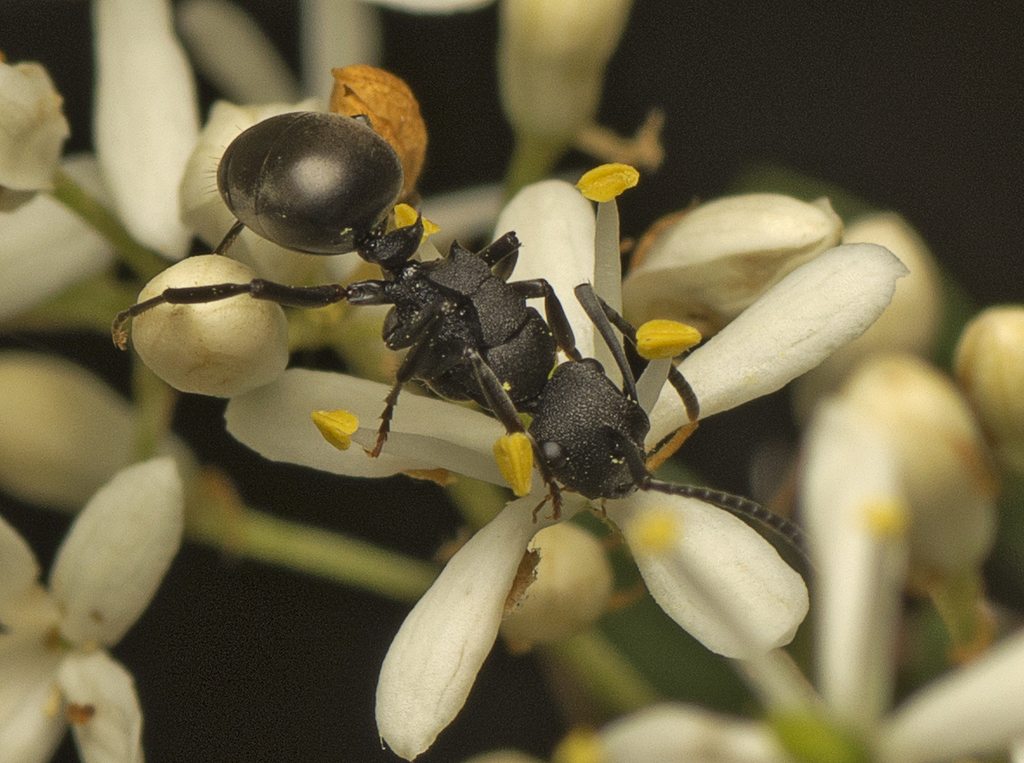
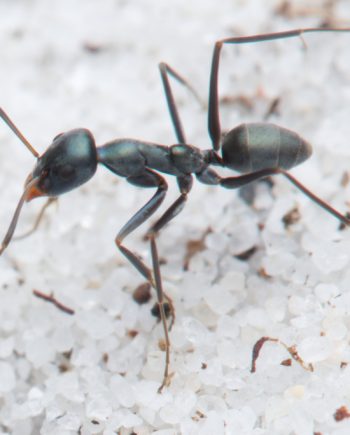
Spiny ants (Polyrhachis) are named for the sharp spines on their bodies, which give them an armoured, almost prehistoric look. They are a big genus with many Australian species, and several have been recorded around Canberra. Ours are all-black species native to the ACT, such as P. phryne; the exact species may vary between batches.
- Species: Polyrhachis sp., an all-black ACT native such as P. phryne (species may vary)
- Common name: Spiny ant
- Difficulty: Intermediate
- Diet: Sugars (honey or sugar water) plus small insects; seeds are also accepted
- Size: Workers roughly 5–10 mm depending on the species; queens are larger, about 10–12 mm in the species hobby sheets describe
- Temperament: Usually shy and mostly active at night; no sting, but it can bite and spray formic acid if provoked
- Colony growth: Slow to moderate; hobby sheets suggest a few hundred workers at maturity
- Housing: Test tube, then a small nest with an outworld
Key points
- Founding: Hobby care sheets for the Australian species P. phryne and P. daemeli describe founding as semi-claustral, so a founding queen should be offered a little sugar and protein. The species varies, so treat this as a guide rather than a rule.
- Polymorphism: Workers in this genus are fairly uniform in size, with no large soldier caste.
- Diet: Keep water available, offer honey or sugar water, and give small amounts of fresh-killed insects for the brood.
- Habitat: Nests range from soil nests to nests in trees, and some species weave nests from larval silk. Species recorded in the ACT include P. ammon, P. phryne, P. femorata, P. semiaurata and P. hookeri (Atlas of Living Australia).
- Temperature: Hobby sheets suggest about 20–26°C in the nest. No winter rest is needed, though colonies slow down in the cold.
- Humidity: Offer a gradient: a lightly damp end of the nest (hobby sheets suggest about 50–70%) and a drier outworld (about 40–70%).
- Feeding: Small amounts, little and often. Spiny ants are timid, so feed at dusk or leave food in the outworld overnight and clear leftovers in the morning.
- Escape risk: Moderate. Treat them as capable climbers: use a snug lid and a slippery barrier around the outworld.
- Sting or bite: Spiny ants have no stinger. They can bite and spray formic acid if handled, which is unpleasant but usually minor. The spines are sharp, so do not handle them.
- Interesting observation: One Queensland spiny ant, Polyrhachis loweryi, lives as a guest inside nests of Rhytidoponera, the genus of the green-head ant (Maschwitz et al. 2003, Insectes Sociaux).
What you get
A queen with a small number of workers and brood: a small colony, typically around 5 workers. Numbers and the amount of brood vary with the season and what we have available.
Shipping and the law
We ship within Australia only. We do not send this species to Western Australia or Tasmania without the relevant clearance. Western Australia prohibits entry of organisms that are not on its permitted list, so we do not send to WA unless Quarantine WA has confirmed in writing that the species is allowed. Tasmania allows only three ants to be imported without restriction (Camponotus consobrinus, Camponotus claripes and Colobopsis macrocephala), so a Tasmanian import permit would be needed for spiny ants. Please check your own state or territory’s rules before you order. Our guide has the details: Is it legal to keep ants in Australia?
Care guides
- Test tube setup for a founding ant queen
- What to feed pet ants in Australia
- Best formicarium for beginners
Photo credits: Polyrhachis phryne by Tony Eales, CC BY-SA 4.0, via iNaturalist; Polyrhachis phryne by Tony Eales, CC BY-SA 4.0, via iNaturalist.
Reviews
There are no reviews yet.