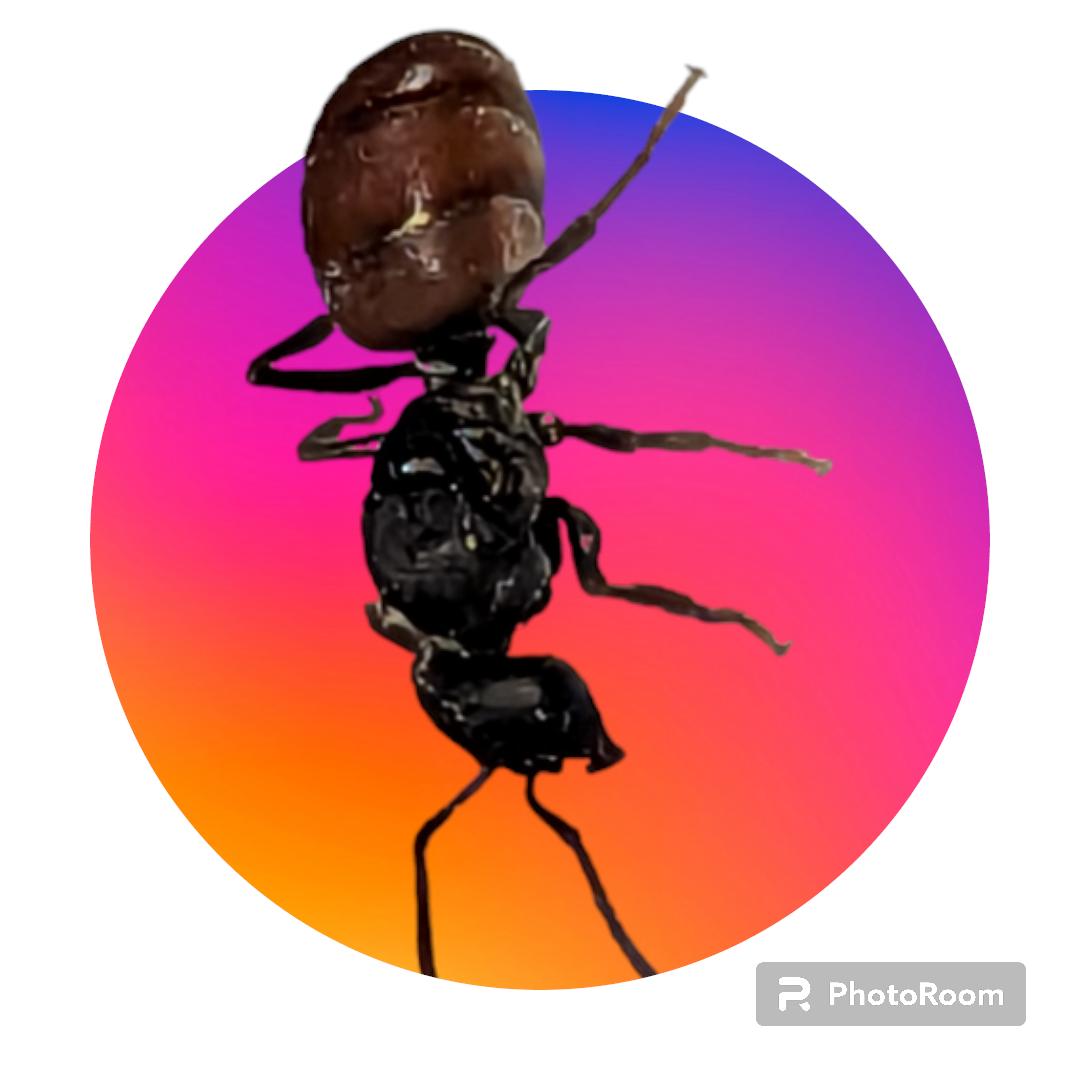
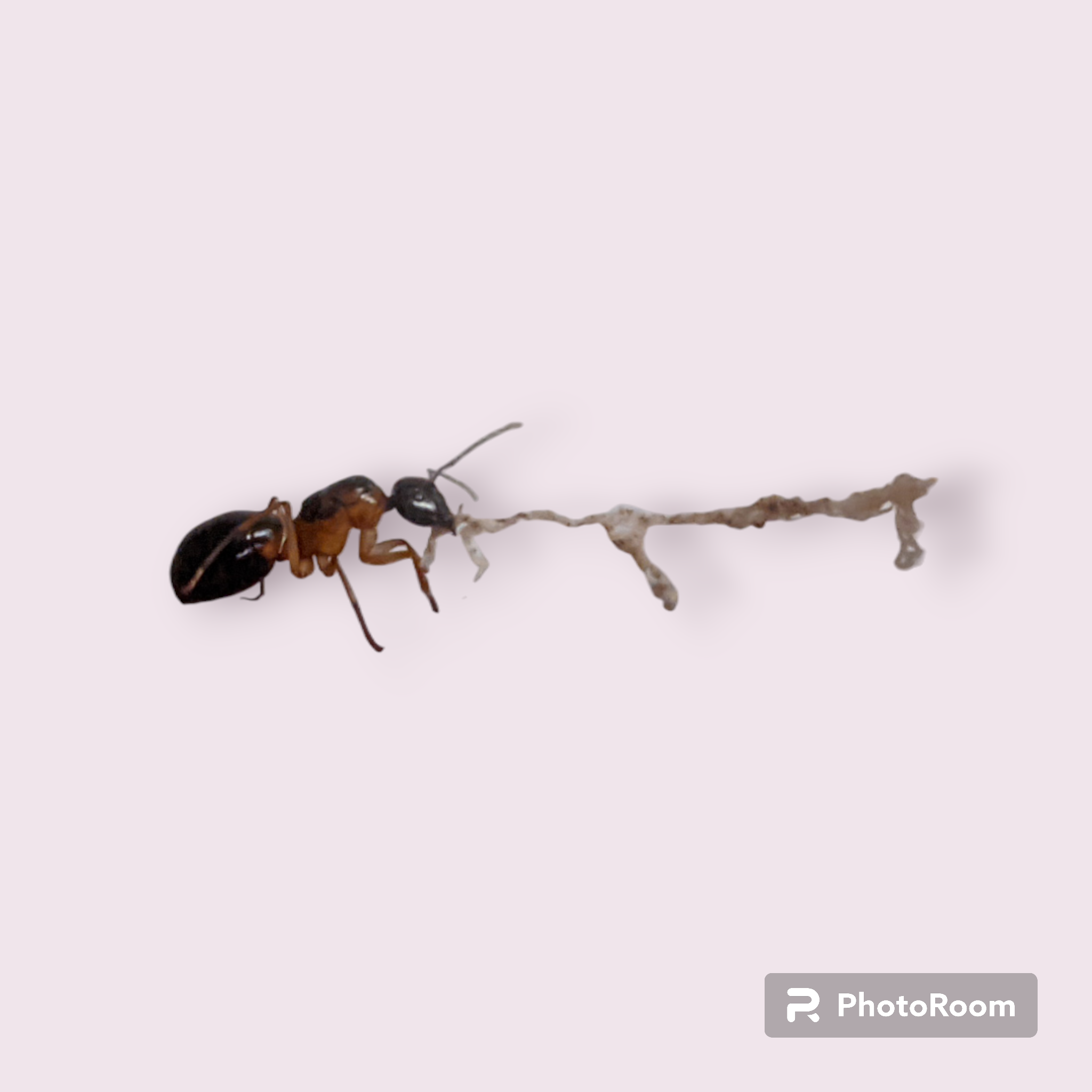
Pet ants need three things: sugar for energy, protein for growth and brood, and a constant supply of clean water. Get those roughly right, keep portions small and remove leftovers before they go mouldy, and you’ve covered most of what matters. Here is how I’d approach feeding a colony in Australia, including which feeder insects are sensible and which foods to skip.
What ants eat in the wild
Ants are opportunists. Sugar ants collect nectar, plant secretions and honeydew from aphids and caterpillars, according to the Australian Museum, and they also hunt and scavenge. AntKeepers describes ants generally as opportunistic omnivores that eat seeds, nectar, fruit, small insects, scavenged remains and honeydew. A new queen, by contrast, lives off her stored reserves until her first workers hatch, so a founding queen needs no food at all (see the test tube guide).
Sugars: the everyday fuel
Sugars power the workers. AntKeepers lists honey, sugar water, nectar, syrup and fruit juice as suitable carbohydrates, and recommends liquid feeders because they give constant access while limiting spills and contamination.
- Sugar water: one Swiss ant shop’s feeding guide suggests three parts water to one part sugar. Hobby recipes vary, and I’d stay on the dilute side.
- Honey: many keepers use it, but it’s thick, so dilute it with water.
- How to offer it: a tiny drop on a scrap of foil, or a small liquid feeder, placed in the outworld.
- Replace it before it ferments or grows mould. The same shop advises removing uneaten food after about 24 hours.
Sugar demand rises with brood. A University of Sydney experiment on ant colonies found that the larvae’s appetite for sugar seemed to drive the colony’s foraging, and that doubling the larvae prompted many more foragers (press release). That matches what keepers see: more larvae, thirstier colony.
Protein: small and steady
Protein is for the queen and larvae, so it matters most in growing colonies. Good options include:
- Fruit flies, small crickets and cut-up mealworms.
- Pre-killed or freeze-dried insects, and commercial ant protein products.
- A crumb of hard-boiled egg yolk, which the Swiss shop’s guide and my own species notes both mention.
Keep pieces small enough for your workers to carry, and prefer pre-killed insects. Live prey can injure a small colony, and the Swiss shop’s guide also advises freeze-dried or humanely killed insects.
Don’t overdo it. A lab study of black garden ants (Lasius niger) at the University of Sydney found that a diet heavy in protein cut worker lifespan sharply, and that even a day of it shrank colonies (Dussutour and Simpson 2012). It wasn’t done on sugar ants, but it supports the “small and steady” approach. Fats matter mainly for queens and reproductive ants; AntKeepers suggests oil-rich foods like seeds and fatty insects only in moderation.
Feeder insects in Australia
- Buy from reputable local suppliers. Pet and reptile feeder suppliers sell crickets, mealworms and fruit fly cultures.
- Don’t order feeder insects from overseas. The Department of Agriculture says live food for animals, such as insects or worms, can’t be imported, and that dried insects fed to animals need an import permit.
- Avoid insects from your garden or kitchen. I can’t give you a statistic, but they may carry pesticide residues or parasites, and I wouldn’t gamble a colony on them.
- Tasmania: the state’s Animal Biosecurity Manual (version 3, March 2026) lists house crickets and mealworms among the live invertebrates that may be imported without restriction, if sent without soil. Other feeders may need a permit, so check first. More in my guide to ant keeping and the law.
How often and how much
Published advice differs. AntKeepers says some species need daily feeding and others every few days, and tells you to watch your ants and adjust. The Swiss shop suggests feeding small colonies every 2 to 3 days and larger ones every 1 to 2 days.
My starting point for a small sugar ant colony:
- Few workers: a pinhead drop of dilute sugar water two or three times a week, and a crumb-sized piece of protein about once a week.
- Growing colony: feed more often and more generously, but only as much as is eaten within a day.
- Always: remove leftovers, and keep fresh water available. A cotton-plugged test tube works as a drinking source.
If food keeps piling up uneaten, cut back. If it vanishes instantly and workers crowd the feeder, offer a bit more.
What to avoid
- Salty, spicy or processed human food. The Swiss shop’s guide warns against foods with additives, spices or high salt.
- Rotting leftovers. AntKeepers warns that uneaten food grows mould and bacteria.
- Pesticide-treated fruit, plants or insects.
- Thick, undiluted honey.
- Bait or spray near the colony. Ant baits are designed to kill ants, so keep them well away from your formicarium.
A note on sugar ants
Banded sugar ants live up to their name. A Swiss guide lists Camponotus as preferring honey, and protein from insects such as mealworms. The practical rule is the same as everywhere: sugar often, protein in moderation, water always. My care guide puts feeding into the bigger picture, and if you’re ready to start a colony you’ll find banded sugar ants in the shop.
Frequently asked questions
Can pet ants eat honey?
Yes, most can, but dilute it with water so it isn’t sticky, and replace it before it ferments.
How often should I feed my ants?
Small colonies need small amounts every few days, and bigger colonies need feeding more often. Remove food that isn’t eaten within a day.
Can I feed my ants insects from the garden?
I wouldn’t. Wild insects can carry pesticides or parasites. Use commercially bred feeder insects instead.
Do ants need water as well as sugar water?
Yes. Keep a separate supply of clean water, such as a cotton-plugged test tube, available at all times.
Do founding queens need to eat?
No. They live off their reserves until the first workers appear.
