

Description
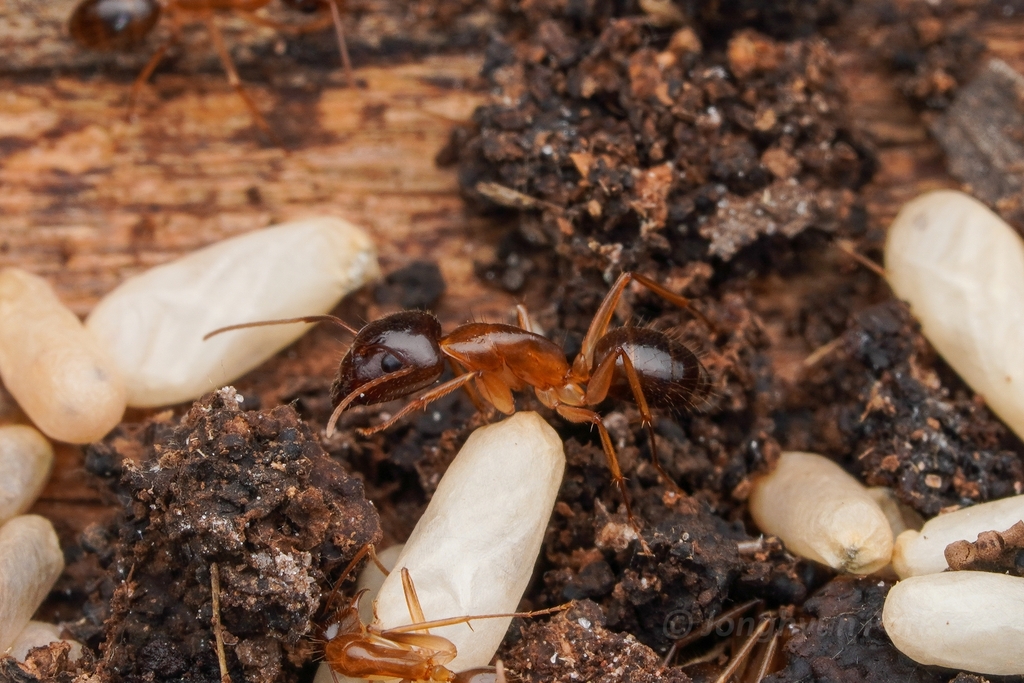
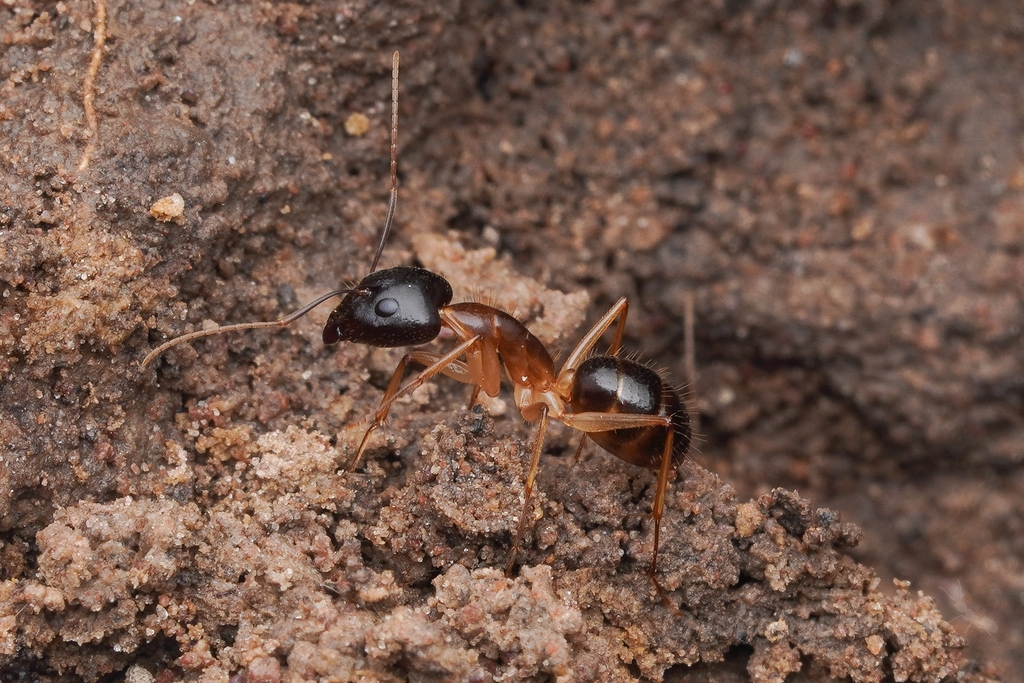
Camponotus humilior is a nocturnal sugar ant that is sold in Australia as the “household sugar ant”. Records of this species are mostly from Queensland and northern New South Wales, with the southernmost NSW records around Sydney. It is a placid, easy sugar ant that suits beginners and is a good alternative if you already know the banded sugar ant.
- Species: Camponotus humilior (Forel, 1902)
- Common name: Household sugar ant
- Difficulty: Beginner
- Diet: Sugars (honey or sugar water) plus small insects
- Size: Workers roughly 8–10 mm with some larger majors; queens up to about 15 mm (seller figures)
- Temperament: Placid and mostly nocturnal; no sting, but it can bite if threatened
- Colony growth: Moderate; keep in a test tube until there are about 15–20 workers
- Housing: Test tube, then a nest with dark chambers and an outworld with a snug lid
Key points
- Claustral founding: A queen can found a colony on her own without feeding until her first workers appear. The colonies we supply are already past this stage.
- Polymorphism: Minor and major workers are both present.
- Diet: Honey or sugar water, plus small protein such as fruit flies or other small insects. One keeper reports that workers loved honey, shredded a moth quickly and mostly ignored peanut butter.
- Habitat: In south-east Queensland the Queensland Museum reports that it commonly nests inside houses, in wall cavities and ceiling spaces. Outdoors it nests in rotten wood on the ground and in cavities or dead branches in trees.
- Temperature: A warm-climate ant. Keep the nest warm and steady, roughly 24–26°C according to a hobby care guide.
- Humidity: No reliable species-specific figures are published. As for other sugar ants, offer a gradient: a lightly damp end of the nest and a drier outworld, so the ants can choose.
- Feeding: Small amounts of sugar and protein, little and often. Because they are nocturnal, offer food in the evening and clear leftovers in the morning.
- Escape risk: Moderate. Use a snug lid and a slippery barrier around the outworld; one keeper used fluon (a slippery coating) and a lid.
- Interesting observation: Workers are often seen wandering at night, and in Queensland they are known for turning up inside homes after dark.
What you get
A queen with a small number of workers and brood: a small colony, typically around 5 workers. Numbers and the amount of brood vary with the season and what we have available.
Shipping and the law
We ship within Australia only. We do not send this species to Western Australia or Tasmania without the relevant clearance. Western Australia prohibits entry of organisms that are not on its permitted list, so we do not send to WA unless Quarantine WA has confirmed in writing that the species is allowed. Tasmania allows only three ants to be imported without restriction (Camponotus consobrinus, Camponotus claripes and Colobopsis macrocephala), so a Tasmanian import permit would be needed for this species. Please check your own state or territory’s rules before you order. Our guide has the details: Is it legal to keep ants in Australia?
Care guides
- Test tube setup for a founding ant queen
- What to feed pet ants in Australia
- Best formicarium for beginners
Photo credits: Camponotus humilior by Jonghyun Park, CC BY 4.0, via iNaturalist; Camponotus humilior by Jonghyun Park, CC BY 4.0, via iNaturalist.

Reviews
There are no reviews yet.